Service
Garage Door Installation
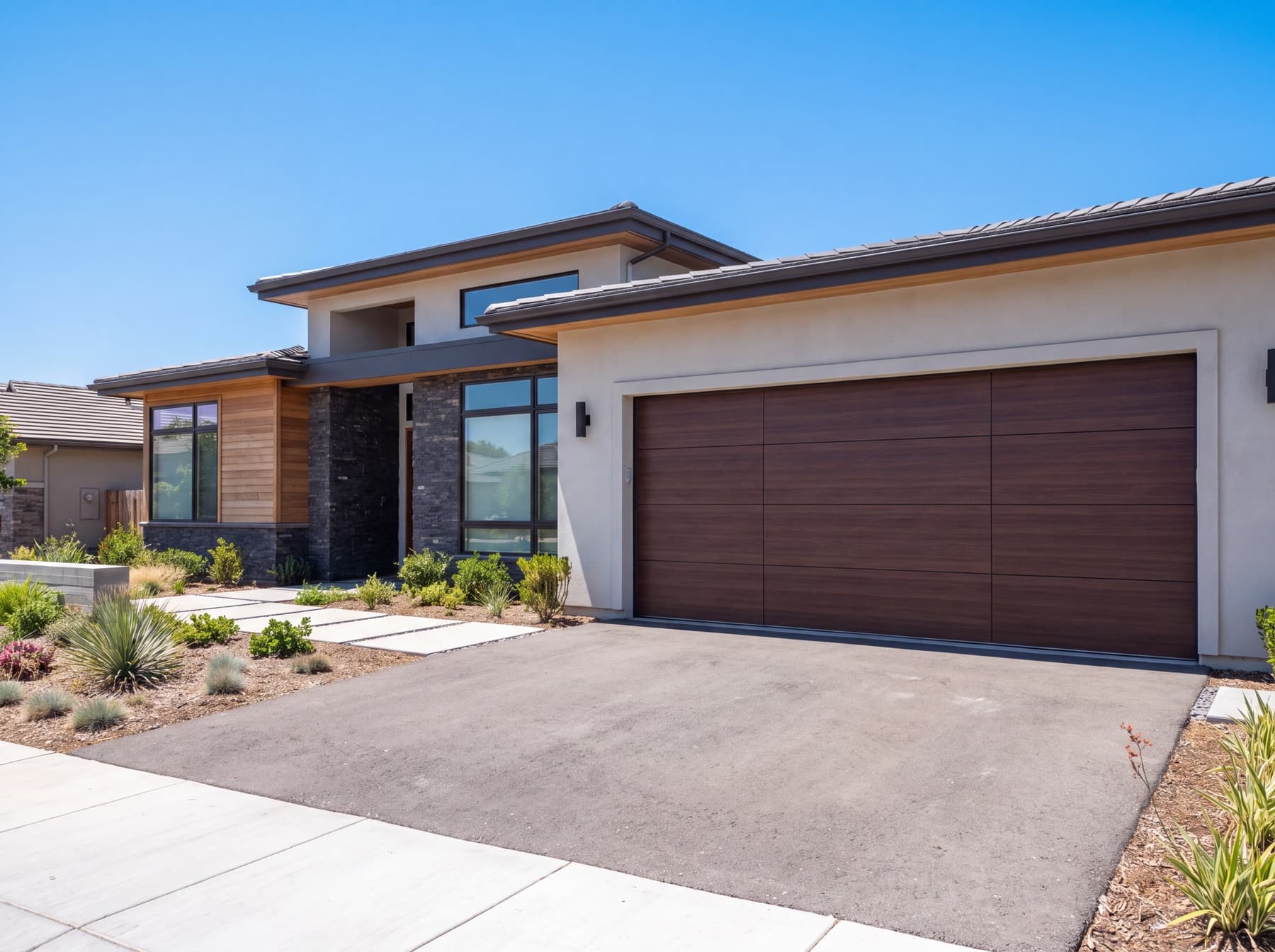
New garage door installation sized to your home's actual opening, not a generic swap. We handle full door replacements, insulated and non-insulated options, and new installs for additions or new construction across the Triangle.
Two questions come up in almost every call about a new garage door: what it's going to cost, and whether the opener that comes with it can actually handle the door. Those two things are more connected than most people expect, since both trace back to the door's size and weight.
What a New Garage Door Actually Costs
Factoring in the door, a new opener, and professional installation, most homeowners land somewhere between $1,500 and $3,350 total. Door size sets the baseline: a single-car door averages $2,171 (typically $844 to $3,498), while a double-car door averages $3,478 (typically $2,435 to $4,522).
Material choice moves the price just as much as size does:
| Material | Typical cost range |
|---|---|
| Steel | $800 – $2,500 |
| Aluminum / glass | $1,200 – $4,000 |
| Wood | $1,500 – $5,000 |
| Custom / oversized / carriage-style | $3,000+ |
On top of the door itself, expect $200 to $600 for installation labor and $250 to $500 if you're adding a new opener rather than reusing the old one. Insulated doors (R-6 to R-18) run a bit higher up front but hold up better through both the Triangle's summer heat and its occasional winter cold snaps.
Key takeaway
Plan on $1,500–$3,350 for a standard single-car door, new opener included. Anything double-car, wood, or custom-sized will run noticeably higher — those two variables, not the base door price, explain most of what separates one quote from another.
Matching the Opener to the Door
An opener's horsepower has to match what it's lifting, not just whatever happens to be in stock. A light, single-car steel door only needs a 1/2 to 1/3 HP motor. Once you're into double-car or insulated doors — generally anything approaching 200 lbs — step up to 3/4 HP for reliable, smooth operation. Wood carriage-style doors and oversized custom units usually call for a full 1 HP chain-drive opener.
Drive type is a separate call from horsepower, and comes down to noise tolerance versus cost:
- Chain drive — durable and the least expensive option, though also the loudest of the three.
- Belt drive — a rubber belt in place of the chain makes this the quietest option, worth it if the garage sits near a bedroom.
- Screw drive — a threaded rod design that lands in the middle: quieter than chain, lower-maintenance than belt.
Mismatching horsepower to door weight causes real problems either way — an underpowered motor straining on a heavy door wears out fast, and an oversized one on a light door isn't gentler on the hardware just because it's stronger.
What's Included When We Install
A full installation includes removing and hauling away the old door, mounting properly sized tracks and hardware, hanging and balancing the new panels, and installing and testing the opener — including the federally required safety reversal sensors. A simple single-door swap is usually a same-day job; anything needing track, header, or opening adjustments can stretch into a second day. Getting the door balanced correctly and the sensors dialed in the first time is what keeps it from becoming a callback a few weeks later.
Where We Offer Garage Door Installation
What Homeowners Look For
A few things customers consistently tell us matter most.
Frequently Asked Questions
Ready to get this fixed?
Call now or request a free estimate — we'll get back to you fast.